

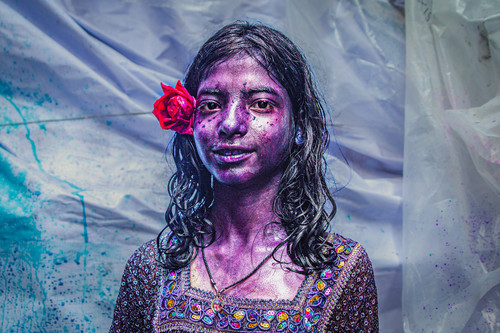
In the crowded streets of Bangladesh, where life unfolds without rehearsal, Tasnimul Hasan Toki searches for moments that cannot be staged. A passing gesture, a sudden reflection, a collision of colors, a face caught between shadow and light, his photographs emerge from the unpredictable theatre of everyday life.
Toki is a street and documentary photographer based in Bangladesh, and although his formal journey into photography is relatively recent, his way of seeing has been developing for years.
His academic background is in English Literature, where he earned a Bachelor of Arts degree. Literature taught him to look beyond the surface, to think about narrative, metaphor, symbolism and the relationships between seemingly unrelated elements. Those ideas now find another language in his photography.
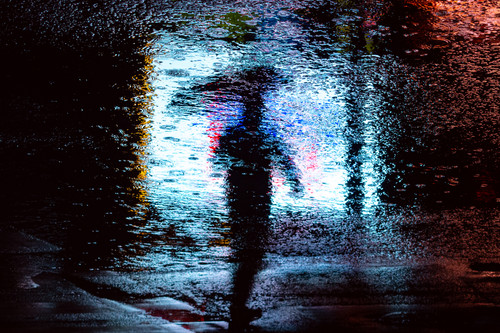
For Toki, a photograph is not simply a record of what happened. It can be a fragment of a larger story, an ambiguous sentence without words, or a visual metaphor that leaves space for the viewer to interpret. His photographic education formally began with a diploma at Counter Foto in Dhaka. The experience gave structure to an instinct that had been developing long before he picked up a camera seriously.
That instinct was shaped, in large part, by cinema.
Before photography became his primary visual language, Toki spent countless hours watching experimental and abstract films. The influence is visible in his photographs: unusual framing, fragmented compositions, dramatic light, visual tension and an interest in moments that feel slightly removed from ordinary reality. The street, in his work, becomes something more than a physical location. It becomes a constantly changing cinematic space. People move through it. Light changes. Colors collide. Reflections distort reality. Shadows divide the frame. For a photographer attentive enough to notice, the ordinary can suddenly become abstract. This is where Toki’s photographic interests converge.
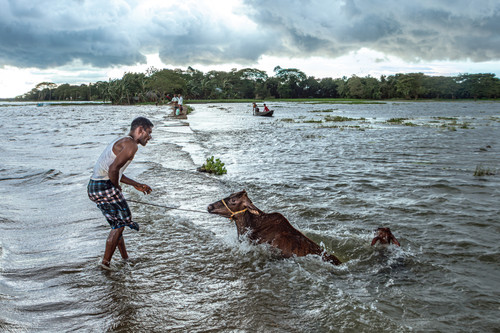
He is drawn toward raw, unscripted moments, the kind that disappear almost as soon as they occur. Rather than constructing scenes, he observes them. His camera becomes a tool for responding to the unexpected: vibrant colors appearing against muted surroundings, human energy breaking through stillness, reflections creating parallel realities, or harsh light transforming an everyday scene into something theatrical. Color plays an especially important role in his visual vocabulary. It is not merely decorative. It often becomes an active element within the composition, creating rhythm, contrast and emotional tension. Light works in a similar way. High-contrast illumination can turn familiar streets into fragmented landscapes of brightness and darkness.
Yet Toki’s work is still a work in progress, and that may be one of its most interesting qualities.
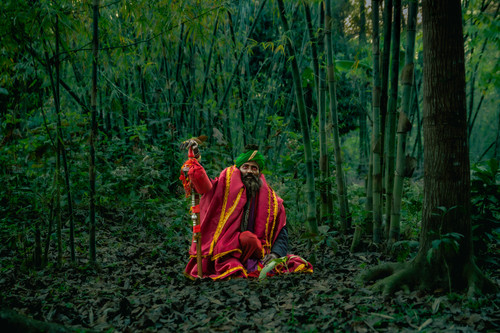
He is at an early stage of his photographic career, exploring the possibilities of his own visual identity rather than presenting himself as someone who has already arrived at a final destination. His current work reflects an artist learning to recognize his strengths, test his instincts and gradually understand what separates his way of seeing from that of others.
That process is perhaps inseparable from photography itself.
A photographer spends years learning not only how to operate a camera, but how to look. Technique can be taught. Equipment can be mastered. Composition can be studied. But developing a personal way of seeing requires time, curiosity and an enormous amount of observation.
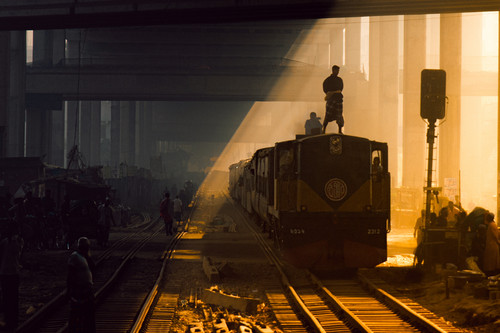
Toki’s journey, from English Literature to cinema, and from cinema to the streets, suggests that his photographic language is being built from multiple forms of visual and narrative thinking.
His photographs live somewhere between documentation and abstraction, between reality and interpretation. The streets provide the raw material. Cinema provides rhythm. Literature provides narrative and metaphor. Photography brings them together.
And somewhere in that intersection, Tasnimul Hasan Toki is beginning to discover his own voice.
Photo: Tasnimul Hasan Toki