


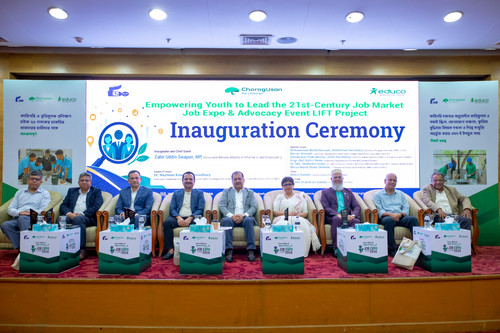
A job expo in Dhaka has highlighted the growing importance of skills development, career readiness and the creation of new employment opportunities for Bangladesh’s large youth population, with speakers calling for a stronger connection between young people’s skills and the country’s economic needs.
The job fair, titled “From Skill to Opportunity,” was held Thursday at the Bangladesh-China Friendship Conference Center in Dhaka. It was organized by the Eco-Social Development Organization (ESDO) with support from ChildFund and Educo Bangladesh, bringing attention to the challenges young people face in entering the labor market and the need to create pathways from skills development to sustainable employment.
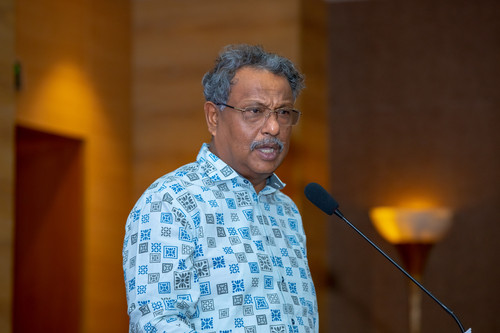
Information and Broadcasting Minister Zahir Uddin Swapan, who attended the event as the chief guest, said developing the skills of young people should not be viewed only as a way to help individuals secure jobs.
He said young people’s knowledge, skills and talent must also be connected with the broader economic potential and national interests of Bangladesh.
According to the minister, skills development is essential, but it cannot by itself solve the country’s employment challenges. The economy must also create new jobs and expand the sectors in which young people can find meaningful employment.
“Job creation,” “job extension” and “job market expansion” may be described in different ways, Swapan said, but their foundation lies in economic policy, industrial policy and production policy.
He said policymakers, political leadership, entrepreneurs, financial institutions and industries all have important roles to play in creating an environment where young people can turn their skills into economic opportunities.
The message was particularly relevant to Bangladesh, where a large proportion of the population is young and where thousands of people enter the labor market every year. For many of them, possessing an academic qualification alone is no longer enough to secure employment. Employers increasingly require practical knowledge, technical abilities, communication skills and the capacity to adapt to changing workplace requirements.
The expo sought to draw attention to that gap between education, skills and employment.
For young people looking for their first job, skill development can provide an important bridge between education and the workplace. Training in areas demanded by industries can improve employability while helping young people understand what employers expect from prospective employees.
But the speakers at the event also stressed that the responsibility cannot rest entirely on young job seekers.
If the economy does not generate sufficient employment opportunities, even a highly skilled workforce can struggle to find suitable work. This makes the expansion of industries, entrepreneurship, investment and production equally important components of an effective employment strategy.
Swapan urged young people to look beyond their immediate career goals and develop an understanding of Bangladesh’s economy, society, politics and national interests.
He said a young person may obtain a job through individual skills, but without a broader understanding of the country’s needs, those skills may not necessarily contribute to national development.
The minister also emphasized the importance of developing young people as responsible citizens alongside preparing them as skilled workers.
He called for skills-development curricula to include knowledge of ethics, philosophy and the existing social and political environment. Such an approach, he said, would help young people understand not only how to earn a living but also how their work can contribute to society.
The discussion at the expo also focused on the need to create new industries and employment sectors in Bangladesh.
Swapan referred to the development of the country’s garment industry as an example of how government policy, training, finance, foreign knowledge and technology can come together to create an entirely new economic opportunity.
He cited an initiative during the administration of former President Ziaur Rahman, when Bangladesh sought knowledge and technology from South Korea and worked to connect the country’s workforce with the emerging garment industry.
According to Swapan, training entrepreneurs, providing access to bank loans, connecting local stakeholders with foreign expertise and technology, and providing necessary policy support helped establish the foundation of a new industrial sector.
He said the benefits of such policy interventions can extend far beyond an individual entrepreneur or company and can eventually influence the wider economy.
The example underlines a central issue discussed at the expo: skills development must be linked to actual economic demand.
Training young people for jobs that do not exist or for industries that are not expanding may have limited impact. Conversely, when training programs are designed around growing sectors and supported by investment and job creation, skills can become a powerful driver of economic development.
Bangladesh’s economic structure makes this challenge particularly important. Swapan noted that the country’s two major sources of foreign exchange are exports and remittances. With a large population living within a relatively small geographical area, he said, Bangladesh has no alternative but to develop new industries and production sectors capable of creating employment and generating economic opportunities.
For young people, this means that career planning increasingly needs to include an understanding of changing market demand.
The “From Skill to Opportunity” theme of the expo reflected that connection. Skills are valuable when they can be converted into employment, entrepreneurship, productivity and income. Creating that conversion requires cooperation between training institutions, employers, financial institutions, government agencies and young people themselves.
The event also placed emphasis on the role of the private sector.
Entrepreneurs and industries can help identify the skills they require, while training organizations can use that information to design programs that better prepare young people for real-world employment. Banks and financial institutions can support entrepreneurs seeking to create new businesses, while policymakers can develop regulations and incentives that encourage investment and job creation.
Such coordination could help address one of the major challenges facing young people: the gap between what they learn and what the labor market demands.
The expo also served as a platform for promoting a more comprehensive understanding of career development. Instead of viewing employment simply as obtaining a position in an existing organization, young people were encouraged to think about entrepreneurship, emerging industries and new areas of economic activity.
For Bangladesh, this approach could be increasingly important as technology, globalization and changing consumer demand reshape traditional employment patterns.
Digital services, technology-driven businesses, manufacturing, creative industries and other emerging sectors are creating new possibilities, but they also require workers with different combinations of technical and soft skills.
Communication, problem-solving, teamwork, adaptability and digital literacy are becoming increasingly important alongside formal qualifications and technical training.
The speakers also stressed the importance of ensuring that young people understand their responsibilities as members of society.
Swapan called for young people to be developed not only as skilled workers but also as responsible and conscious citizens. He said skills development should ultimately serve both individual aspirations and the broader interests of society and the country.
Educo Bangladesh Country Director Abdul Hamid chaired the event. Dr. Naznin Kawsar Chowdhury, executive chairman of the National Skills Development Authority, and Dr. Md. Shahid Uz Zaman, executive director of ESDO, also addressed the gathering.
The participation of a national skills authority alongside development and civil society organizations underscored the importance of cooperation in addressing youth employment.
For Bangladesh’s young population, the challenge ahead is not simply acquiring certificates or completing training courses. The larger challenge is ensuring that those skills lead to productive work, entrepreneurship and sustainable livelihoods.
The job expo therefore highlighted a broader message: skills and employment must move together.
As Bangladesh seeks to expand its economy and take advantage of its demographic potential, creating opportunities for young people will require more than preparing them for existing vacancies. It will require investment in new industries, support for entrepreneurs, access to finance, relevant training and policies capable of expanding the labor market.
The success of future skills-development initiatives will ultimately depend on whether they can build a stronger connection between what young people can do and what the economy needs.
The “From Skill to Opportunity” job expo brought that connection into focus, highlighting the need to transform Bangladesh’s large youth population from a demographic advantage into a skilled, productive and economically empowered workforce.
Photo: Jubair Bin Iqbal